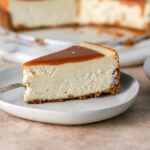
Brown Butter Cheesecake
This brown butter cheesecake has a brown butter graham cracker crust, a rich brown sugar brown butter cheesecake filling and salted caramel topping. It's ultra creamy and decadent. Everyone will love this showstopping dessert!
Servings: 16 slices
Calories: 558kcal
Ingredients
Graham Cracker Crust
- 2 cups graham cracker crumbs about 16 full sheets
- ⅓ cup granulated sugar
- ¼ teaspoon ground cinnamon
- ¼ teaspoon ground nutmeg
- ½ cup unsalted butter browned or melted
Brown Butter Cheesecake Filling
- 7 tablespoons unsalted butter browned, brown bits added to filling
- 32 ounces cream cheese full fat, brick style, room temperature
- ¾ cup brown sugar light or dark, packed
- ¼ cup granulated sugar
- 3 large eggs room temperature
- 1 cup sour cream full fat, room temperature
- 2 teaspoons vanilla extract
- ½ teaspoon cinnamon
Salted Caramel Sauce (optional)
- 1 cup granulated sugar
- 6 tablespoons unsalted butter
- ½ cup heavy cream room temperature
- ¾ teaspoon salt add up to 1 teaspoon
- flaky sea salt for decorating, optional
Instructions
Graham Cracker Crust
- Set one oven rack in the center position and place one rack below it for the roasting pan (for the hot water bath to be used while baking the cheesecake). Preheat oven to 350 Fahrenheit.
- Lightly spray the bottom of a 9 inch springform pan with baking non stick spray. Place a round of parchment paper on the bottom of the pan. Lightly spray the parchment paper.
- Brown the butter for the crust. Melt the butter in a medium, light-colored saucepan over medium heat. Once melted, stir constantly while it foams and bubbles and deepens in color. Once the butter smells nutty and the bits on the bottom are medium brown, remove from the heat. Immediately pour into a large heatproof mixing bowl. Scrape in all the browned bits, Don’t clean the pan yet—you can reuse it later for browning butter for the filling.
- Use store-bought graham cracker crumbs or pulse graham cracker sheets. For graham cracker crumbs, pulse the graham crackers in a food processor to finely ground crumbs. Pour the crumbs into a medium sized mixing bowl. Stir in the sugar, cinnamon and nutmeg (if using). Stir in the melted or browned butter til combined.
- Pour the mixture into the prepared pan. Use your hands to spread it evenly on the bottom and halfway up the sides of the pan. Pat mixture down with medium pressure with your hands or using a small flat bottom measuring cup. Press crumbs into place until compact and not loose or crumbly but avoid pressing too hard.
- Bake for 10 minutes. Remove and place on a wire rack while you prepare the filling. Reduce oven temperature to 325 Fahrenheit.
Brown Butter Cheesecake Filling
- Fill a kettle with water and heat the water to boil. You'll need enough water to add about an inch of water to your roasting pan, so you'll probably need a full kettle. Take out a 9 by 13 inch rectangular pan or a roasting pan. Set aside. This will be for the hot water bath.
- Brown the butter for the filling. In the same saucepan you used before, melt 7 tbsp (100 g) butter over medium heat. Once melted, stir constantly until it smells nutty and the bits on the bottom turn medium brown. Remove from the heat and immediately pour into a small heatproof glass or measuring cup. Scrape in all the browned bits.
- Let the hot butter sit for about 5 minutes to settle. Yellow butterfat will float to the top and the brown bits will sink to the bottom of the bowl.
- Scoop out the brown bits. Carefully pour off most of the yellow butterfat into a separate small bowl. Leave mostly the brown bits behind. Scoop out the brown bits. Transfer them into a small bowl. (It’s okay if a little golden butterfat comes with them, but avoid too much. It can change the consistency of the filling). The browned bits are what we want to mix into the batter. Let the brown bits cool slightly (warm but not hot) before adding them to the filling. (Save the poured-off butterfat for another use—you can bake or cook with it later).
- Make the filling. Next, in the bowl of an electric mixer fitted with a paddle attachment or in a large bowl using a hand held mixer, beat the room temperature cream cheese and sugars on medium speed for 2 minutes until creamy and smooth. Mix in brown butter bits. Add the sour cream, vanilla extract and cinnamon. Beat til just fully combined. Beat in the eggs one at a time. Beat only to combine. Stop mixing as soon as the last egg has been mixed into the batter. DO NOT OVERMIX.
- Pour the cheesecake batter on top of the crust. Smooth the top of the cheesecake with an offset spatula or regular spatula. Place your empty roasting pan or 9 by 13 inch rectangular pan on the bottom/lower rack in the oven. Pour about an inch or a little more than an inch of hot water in the roasting pan. Next, set the cheesecake on the middle rack (above the rack with the roasting pan). Quickly close the oven door to keep the steam from the hot water in the oven.
- Bake for 60 to 75 minutes until the center is almost set. The center of the cheesecake should jiggle slightly when you gently shake the pan but the sides should be set. Turn off the oven. Crack the oven door open slightly and let the cheesecake sit in the oven for 1 hour.
- After 1 hour, take the cheesecake out of the oven. Set the pan on a rack and allow cheesecake to cool uncovered til it's room temperature. Next, use an offset spatula or a small flexible rubber spatula and run it around the edges of the cheesecake. Press the spatula against the pan as you do this. This will mak sure the cheesecake isn't sticking to the pan. Refrigerate the cheesecake uncovered for a minimum of 5 hours or overnight.
- Once the cheesecake has cooled and set, prepare the caramel topping, if making.
Salted Caramel Sauce (optional)
- Measure out the butter, heavy cream and salt. Allow to come to room temperature. Place them next to the stove. Take out a wooden spoon, high heat resistant silicone spatula and a whisk.
- Add the sugar to a medium heavy bottomed stainless steel saucpan with high sides. Stir sugar constantly over medium heat with a wooden spoon or heat resistant silicone spatula. Not much will happen for the first few minutes, but keep stirring.
- After a few minutes, the sugar will start to clump up and then will melt into a coppery, amber colored liquid. Continue stirring until sugar has completely melted.
- Once the sugar has melted completely, lower heat slightly and immediately whisk or stir in the butter until it's completely melted. If the butter seperates from the sugar, remove pan from heat and whisk for a minute or two until the butter and sugar are combined.
- With the pan off the heat, slowly whisk in the heavy cream. The caramel will bubble up when you add the cream, this is normal. After all the heavy cream has been added, stop stirring. Place the pan back on the heat and allow caramel to boil for 1 minute.
- Remove from heat. Stir in the salt, to taste. Allow to cool for at least 10 minutes before using. Caramel will thicken as it cools.
- Pour the caramel over the cooled cheesecake in advance or just before serving. Sprinkle with flaky sea salt, if using, immediately before serving. Use a long, sharp knife to cut the cheesecake. Wipe the knife clean and run it under hot water in between slicing for extra neat slices.
Notes
Cream cheese and sour cream: Use full fat cream cheese and sour cream. They add the best flavor and texture. Use brick style cream cheese, not the tubs.
Room temperature ingredients: Take cream cheese, sour cream and eggs out of the fridge for at least 2 hours. Room temperature ingredients make it possible for ingredients to get fully incorporated and makes your cheesecake creamy. Make sure your heavy cream for the caramel is also at room temperature.
Brown butter for the filling: Make sure to only add mostly brown bits to the filling. They have the most flavor. We are not using the leftover golden butterfat in this recipe. Save it for future use. You can bake or cook with it or drizzle it over vegetables.
Avoid overmixing: Beat the cheesecake mixture til the ingredients are just incorporated. Over beating creates air bubbles which can result in cracks in the baked cheesecake.
Salted caramel sauce: Use this recipe or store bought or enjoy the cheesecake without a topping. For step by step photos for making caramel sauce, please see the full recipe post for salted caramel sauce.
Storage: Store leftover cheesecake in an airtight container in the refrigerator for up to 5 days. You can freeze individual slices in an airtight container for up to 30 days. Thaw at room temperature 1-2 hours.
Nutrition
Serving: 1slice | Calories: 558kcal | Carbohydrates: 42g | Protein: 6g | Fat: 42g | Saturated Fat: 25g | Polyunsaturated Fat: 2g | Monounsaturated Fat: 11g | Trans Fat: 1g | Cholesterol: 145mg | Sodium: 380mg | Potassium: 150mg | Fiber: 0.4g | Sugar: 35g | Vitamin A: 1467IU | Vitamin C: 0.2mg | Calcium: 102mg | Iron: 1mg
