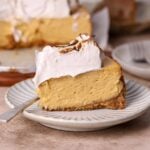
Sweet Potato Cheesecake Recipe
Sweet Potato Cheesecake is the perfect showstopping dessert recipe! It's made with a creamy sweet potato cheesecake filling baked over a buttery graham cracker crust. It's delicious all on its own, but you can also dress it up with toasted Swiss meringue, a dollop of whipped cream, or a drizzle of salted caramel sauce. Choose your favorite or enjoy it as is!
Servings: 16 slices
Calories: 521kcal
Ingredients
Graham Cracker Crust
- ½ cup unsalted butter melted
- 2 cups graham cracker crumbs from about 16 full sheets of honey graham crackers
- ⅓ cup granulated sugar
- ¼ teaspoon ground cinnamon
- ¼ teaspoon ground nutmeg optional
Sweet Potato Cheesecake Filling
- 1½ cups sweet potato puree from about 1 lb (500 g) raw sweet potatoes (2-3 medium) measure after pureeing
- 24 ounces cream cheese brick style, full fat, room temperature
- 1½ cups light brown sugar packed
- 3 large eggs room temperature
- 2 large egg yolks room temperature
- ¼ cup all purpose flour
- ½ cup sour cream full fat, room temperature
- 1½ teaspoons vanilla extract
- 1 teaspoon ground cinnamon
- ¼ teaspoon ground ginger
- ⅛ teaspoon ground nutmeg optional
Spiced Swiss Meringue (Optional)
- 4 large egg whites room temperature, see notes below
- ¾ cup granulated sugar
- ¼ teaspoon cream of tartar optional
- ¼ teaspoon salt
- 1 teaspoon vanilla extract
- ½ teaspoon ground cinnamon
- ⅛ teaspoon ground nutmeg optional
Instructions
Sweet Potato Puree
- Important: Read through the recipe before you start to make sure you have everything you'll need. You can also plan ahead and break up some of the steps over a few days to make it much easier. See recipe notes below for more make-ahead tips.
- Start the recipe by roasting and pureeing the sweet potatoes. The puree needs to cool completely before using. You can make also roast them up to 3 days ahead and store the puree in the fridge. Bring to room temperature before using.
- Preheat the oven to 400°F. Scrub the sweet potatoes, pat dry, and pierce them several times with a fork. Place on a parchment-lined baking sheet. Roast for about 60 minutes, until very soft when pierced with a knife.
- Cool for at least 15 minutes then peel and puree in a food processor until completely smooth. Scrape down the sides of the food processor. Measure out 1½ cups (350 grams) of puree and cool completely before using. You can roast the sweet potatoes up to 3 days ahead and keep it covered in the fridge. Bring to room temperature before making the filling.
Graham Cracker Crust
- Set one oven rack in the center position and place one rack at the lowest rack position for the roasting pan (to be used while baking the cheesecake). Preheat oven to 350℉.
- Lightly spray the sides and bottom of a 9 inch springform pan with baking non stick spray. Place a round of parchment paper on the bottom of the pan. Lightly spray the parchment paper. Optional, but recommended, press two strips of parchment paper against the sides all around the pan. They should peak up over top the pan just a little. It will keep the cheesecake from sticking to the sides.
- Melt the butter.
- Use store-bought graham cracker crumbs or finely crush your own graham cracker sheets. To crush the graham cracker crumbs, pulse the graham crackers in a food processor to finely ground crumbs. Break up any remaining pieces of graham crackers. Pour the crumbs into a medium sized mixing bowl. Stir in the sugar, cinnamon and nutmeg (if using). Pour in the melted butter and stir until well combined.
- Pour the graham cracker mixture into the prepared pan. Use your hands to spread it evenly on the bottom and halfway up the sides of the pan. Pat mixture down with medium pressure with your hands or using a small flat bottom measuring cup. Be sure to press crumbs into place until compact and not loose or crumbly but avoid pressing too hard.
- Bake for 10 minutes. Crust should be golden brown. Remove and place on a wire rack to cool while you prepare the filling. Reduce oven temperature to 325 Fahrenheit.
Sweet Potato Cheesecake Filling
- Important: Remember your cold ingredients need to come to room temperature before you begin or it won't turn out.
- Fill a kettle with water and heat the water to boil. You'll need enough water to add about an inch of water to your roasting pan, so you'll probably need a full kettle. Take out a 9 by 13 inch rectangular pan or a roasting pan. Set aside. This will be for the hot water bath.
- In a small bowl, whisk together the flour, cinnamon, ginger, and nutmeg until evenly combined. Set aside.
- Next, combine the brown sugar and the room temperature cream cheese in the bowl of a stand mixer fitted with the paddle attachment. Mix on low speed until the mixture is creamy and smooth, about 2 minutes. Scrape down the sides and bottom of the bowl and the paddle attachment to then mix again to incorporate any bits.
- Mix in the flour and spices until combined. Add the sweet potato puree, vanilla extract and sour cream, mixing until combined. Scrape down the bowl and paddle attachment again. Mix again until everything scraped off the sides is fully combined.
- Beat in the eggs one at a time. Beat only to combine. Scrape down the sides and bottom of the bowl after mixing in the first two eggs and again after adding all the eggs and yolks. Stop mixing as soon as the last egg has been mixed into the batter. DO NOT OVERMIX.
- Pour the cheesecake batter on top of the crust. Smooth the top of the cheesecake with an offset spatula or regular spatula.
- Place the roasting pan on the bottom rack in the oven. Pour about an inch or a little more than an inch of hot water in the roasting pan or 9 by 13 inch rectangular pan. Next, set the cheesecake on the middle rack. Quickly close the oven door to keep the steam from the hot water in the oven.
- Bake for 60 to 65 minutes until the center is almost set. The center of the cheesecake should jiggle slightly when, with an oven mitt on, you gently shake the pan but the sides should be set. Turn off the oven. Crack the oven door open slightly and let the cheesecake sit in the oven for 1 hour.
- After 1 hour, take the cheesecake out of the oven. Set the pan on a rack and allow cheesecake to cool uncovered until it's room temperature. Cover with aluminum foil or place in an airtight container such as a cake carrier and refrigerate the cheesecake for a minimum of 5 hours or overnight. Keep cheesecake in the fridge until you're ready to serve it.
Spiced Swiss Meringue (Optional)
- Make the meringue just before serving. Make sure to allow time for the egg whites to come to room temperature. See notes section below for tips. When ready to make meringue, set the cheesecake on cake stand. Take out your kitchen blow torch and set it aside. Take out a large metal mixing bowl, a metal whisk and your whisk attachment. (I use my stand mixer and the metal bowl from the stand mixer to make meringue but you can also use a handheld mixer and a metal bowl). Wash the bowl, whisk attachment and a whisk (even if they are clean). Next, wipe them with vinegar or lemon juice and rinse with hot water. Dry with a clean kitchen towel. This will wash away any traces of grease or fat that may be in the bowl. Even a small amount of fat or yolk residue can prevent egg whites from forming stiff peaks.
- Combine the room temperature egg whites, sugar, salt and cream of tartar in the bowl of a stand mixer. Set the bowl over a saucepan with 1" simmering water. Make sure the bottom of the mixing bowl is not touching the water. Set heat to low. Whisk constantly for about 8-9 minutes, until an instant thermometer registers 175℉ (be sure the thermometer isn't touching the bottom of your bowl). Remove from heat.
- Add the vanilla extract, cinnamon, nutmeg then mix with the whisk attachment on high speed in stand mixer for about 5 minutes until mixture is thick and balled up inside the whisk attachment. Remove the whisk attachment and flip it so that the bottom is pointing up. The meringue should be stiff and only the very top strand should flip over.
Decorating and Serving
- Once chilled, remove the cheesecake from the springform pan. Peel off the paper. When you’re ready to serve the cheesecake, make the Swiss meringue or whipped cream (see notes section below for more topping suggestions). Toasted Meringue: Plop the meringue on top of the cheesecake. Leave it as is or gently spread with an offset spatula or swirl it with the back of a spoon. Torch the meringue with a kitchen blow torch just before serving. (Torch the sides of the meringue in addition to the peaks). Whipped Cream: Use homemade or store bought. Serve it alongside the cheesecake to dollop on individual slices. Caramel Sauce: Use homemade or store bought. Drizzle over the entire cheesecake or serve alongside cheesecake to drizzle over individual slices.
- Use a long, sharp knife to cut the cheesecake. Wipe the knife clean and run it under hot water in between slicing for extra neat slices.
Video
Notes
Cream cheese and sour cream: Use full fat cream cheese and sour cream. They add the best flavor and texture. Use brick style cream cheese, not the tubs.
Room temperature ingredients: Take cream cheese, sour cream, sweet potato puree and eggs out of the fridge for at least 2 hours or overnight. Room temperature ingredients make it possible for ingredients to get fully incorporated and makes your cheesecake creamy.
Avoid overmixing: Beat the cheesecake mixture until the ingredients are just incorporated. Over beating creates air bubbles which can result in cracks in the baked cheesecake.
Scrape down your bowl several times while mixing: Bits of the batter can stick to the sides and bottom of the bowl and to the paddle attachment. Make sure to scrape them several times while mixing.
Use a stand mixer: The filling has several elements incorporated and a stand mixer fitted with the paddle attachment makes mixing it easier. A hand mixer will also work, but stand mixer is preferred.
Oven door: If your oven door opens too wide, place a wooden spoon in the oven door. This will keep the door propped open slightly while preventing it from opening too wide.
Topping options: As mentioned, this cheesecake is gorgeous and delicious as is without a topping. You can also top it with homemade or store bought whipped cream, toasted Swiss meringue, salted caramel sauce, toasted nuts, or halva!
Storage: Store leftover cheesecake without a topping in an airtight container, such as a cake carrier, in the refrigerator for up to 5 days. If you plan to add a topping, wait until the day of serving. Whipped cream or meringue is best prepared just before serving.
Serve whipped cream on the side rather than spreading it over the cheesecake, as it can wilt during storage. If you top the cheesecake with meringue, leftovers can be stored in the refrigerator for up to 3 days.
Nutrition
Serving: 1slice | Calories: 521kcal | Carbohydrates: 49g | Protein: 8g | Fat: 34g | Saturated Fat: 19g | Polyunsaturated Fat: 2g | Monounsaturated Fat: 9g | Trans Fat: 0.4g | Cholesterol: 161mg | Sodium: 346mg | Potassium: 193mg | Fiber: 1g | Sugar: 40g | Vitamin A: 1225IU | Vitamin C: 11mg | Calcium: 100mg | Iron: 1mg
