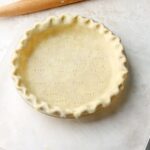
Homemade Pie Crust
This homemade pie crust is flaky, tender and delicious. It's made with just 4 basic ingredients. It only takes minutes to mix together by hand. It's perfect for pies, pop tarts and more!
Servings: 1 single crust for a 9 inch pie
Calories: 1406kcal
Equipment
Ingredients
- 1¼ cups all purpose flour plus a little more for rolling out the dough
- 1½ teaspoons granulated sugar
- ½ teaspoon salt
- ½ cup unsalted butter cold and cut into ½ inch cubes
- 3-5 tablespoons water ice cold, I usually use about 4 tablespoons
Instructions
- Cut the cold butter into ½ inch cubes. Place the butter back in the fridge while you measure the rest of your ingredients. Measure ¼ cup of cold water* in a bowl. Add a few ice cubes into the water and swirl the ice around. Place the bowl of water in the fridge until needed. You can also place the bowl in the freezer for a few minutes to ensure the water is very cold.
- Take out all the things you will need so that you don't have to go looking for them while making the dough. Take out a spatula, fork, pastry cutter (if using). and some plastic wrap.
- In a large mixing bowl, whisk to combine the flour, sugar and salt. Add the cubed butter. Use a spatula to toss the butter so it's fully coated with flour. Use the spatula to separate the butter cubes til they're all lightly coated.
- Next, use a pastry cutter to start to cut the butter into the dry ingredients. Use one hand to turn the bowl while the other hand uses the pastry cutter. Try not to aim for the same spot in the bowl each time and aim to slice through butter with each stroke. When the pastry blender clogs up with butter, clean it out with a butter knife. Use a spatula or your fork to toss the ingredients a little to make sure the butter stays coated with flour. Continue blending with the pastry cutter and turning the bowl til the largest pieces are no larger than peas.
- I recommend placing the bowl in the fridge to chill for 5 minutes at this point. This is optional, but it will help keep the ingredients cold.
- Next, make a well in the center of the bowl. Pour 2 tablespoons of the cold water (without the ice) into the well. Toss/stir the mixture with a fork to distribute the water. It should be clumpy with some dry spots at this point. Break up any sticky spots. Add 1-2 more tablespoons of water or cold vodka. Stir around with a fork til you don't see anymore pools of liquid anywhere.
- Use your hands to scoop as much of the mixture as possible then press it back down onto the rest of the mixture with your fingertips. Sprinkle or flick a tiny bit of water right onto any very dry spots if you notice them. Turn the bowl about a quarter turn and quickly repeat this process a few more times so that the mixture comes together. Knead only as much as needed to combine the dough. Stop kneading when the dough has come together and there are no longer any loose floury bits on the bottom of the bowl.
- Do not add any more water than you need. The dough will feel moist but not wet. (I typically use about ¼ cup of liquid or maybe a touch more).
- Pack the dough into a ball with your hands then place the dough on a sheet of plastic wrap. Gently pat it into a 1 inch thick disc. Seal any broken edges by pushing the edges of the dough gently on the counter. Wrap dough tightly with a double layer of plastic wrap.
- Set dough in the fridge for at least 30 minutes, preferably 1-2 hours or up to 2 days.
- When you’re ready to roll out the dough, turn the dough out on a floured surface. Flour both sides of the dough and your rolling pin. Start in the middle of the disc. Roll the dough out gently in all directions. Rotate the dough a quarter turn between each roll and flip it over ocasssionally to make sure it's not sticking to the counter. Continue flouring the counter and rolling pin as needed. Push any cracked areas together and keep rolling. Set a 9 inch pie plate upside down on top of the dough to check that it's rolled out big enough to allow a 2 inch overhang of dough all around the edge of the pie plate. The dough should be about ⅛ inch thick.
- Place your pie plate right next to the dough. Gently fold the dough in half then lift it and place it on your pie plate. Unfold the dough on top of the plate.
- Trim the edges of the dough with kitchen scissors so that it's about 2 inches on all edges. Adjust the dough so that it's fully covering the bottom of the pan and also touching the sides. To do this, lift the dough with one hand gently press it down into the side with the other hand. Do this around the whole dish then run your hand around the inside edge of the pan to make sure the dough is properly lined in the plate.
- Fold the excess dough under itself to create a thick crust edge. Lift the crust up at the edge, fold the excess dough under itself and towards the dish. Use your fingers to firmly press the dough so that the edge is flush with the pie plate. Chill the dough for another 5 minutes before crimping.
- Use your fingers to crimp the edges with your favorite style. You can also just press the tines of a fork against the edge dough to flatten against the rim of pie dish or for the simplest option, you can any crimping.
- Proceed with the pie by following your specific pie recipe’s instructions.
Notes
Water: Add just enough water to hold dough together. I usually use around 4 tablespoons of water. (For a flakier crust, I recommend replacing 1-2 of the tablespoons of water with equal parts cold apple cider vinegar or vodka in place of 1-2 tablespoon of water. Place the apple cider vinegar or vodka in the fridge to chill as well, if using).
Tools: I prefer cutting the butter into the flour using either my hands or a pastry cutter. A pastry cutter is good way to work the cold butter into the flour. It gives you irregular-sized pieces of butter distributed throughout the mixture.
Using your hands: If you don't have a pastry cutter, use your hands to cut rub the butter into the flour. Pick up a cube of butter in each hand and press each cube firmly to squish or flatten it. Do this with each cube of butter. Make sure each cube stays coated with flour as you work.
Keep it COLD: Keeping your pie dough cold is so important to making flaky pie dough. In addition to using cold ingredients, you can also chill your bowl and pastry cutter for a few minutes before starting. This helps keep the ingredients cold while mixing.
Butter: Use very cold, cubed unsalted butter. Cut the cold butter into 1/2 inch cubes. Place it in the fridge or freezer while you combine the dry ingredients. For best results, use high fat, European style unsalted butter. If using salted butter, add only 1/4 teaspoon extra salt.
Chill Time: Plan for at least 1 hour to refrigerate the dough before rolling it out. This will make the dough firm enough to roll out. It also makes for the best texture and taste. Baking the dough when it's cold is super important!
Rolling dough out: Roll dough out on a lightly floured surface. Don't press too hard when rolling out the dough. Use light to medium pressure. Flip the dough over a few times and rotate it a quarter turn frequently while rolling it. This will keep the dough from sticking to your counter. To make clean up easier, roll dough out on a silicone pastry mat or on a sheet of parchment paper!
Transfering dough to pie pan: Gently roll the dough onto your rolling pin. Unfold it onto the pie pan. This helps place it onto the pie pan without needing to fold it.
Doubling the recipe: This recipe makes enough dough for one pie crust base. If you'd like to make a pie with a top pie crust or lattice top, you can double the recipe. Double all the ingredients except for the water. Start with 2 tablespoons water and add a tablespoon more if/as needed. When you're at the point in the recipe when you chill the dough, cut the dough in half with a bench scraper. Shape each half into a disks then place them in the fridge to chill.
Storage: Wrap the disk of pie dough in two layers of plastic wrap and refrigerate up to 2 days. Let sit on the counter for about 20 minutes before rolling out. You can refrigerate the dough-lined pie plate up to 1 day in advance of baking. Once the pie plate has been lined with the dough and the edges crimped as desired, chill again for 2 hours before proceeding with the recipe. To freeze the crust, place the disc wrapped in plastic wrap in an airtight ziplock freezer bag and freeze for up to 3 months. Thaw overnight in the fridge, then follow the make-ahead instructions above.
Nutrition
Serving: 1pie crust | Calories: 1406kcal | Carbohydrates: 125g | Protein: 17g | Fat: 94g | Saturated Fat: 59g | Polyunsaturated Fat: 4g | Monounsaturated Fat: 24g | Trans Fat: 4g | Cholesterol: 244mg | Sodium: 1181mg | Potassium: 195mg | Fiber: 4g | Sugar: 6g | Vitamin A: 2839IU | Calcium: 53mg | Iron: 7mg
